
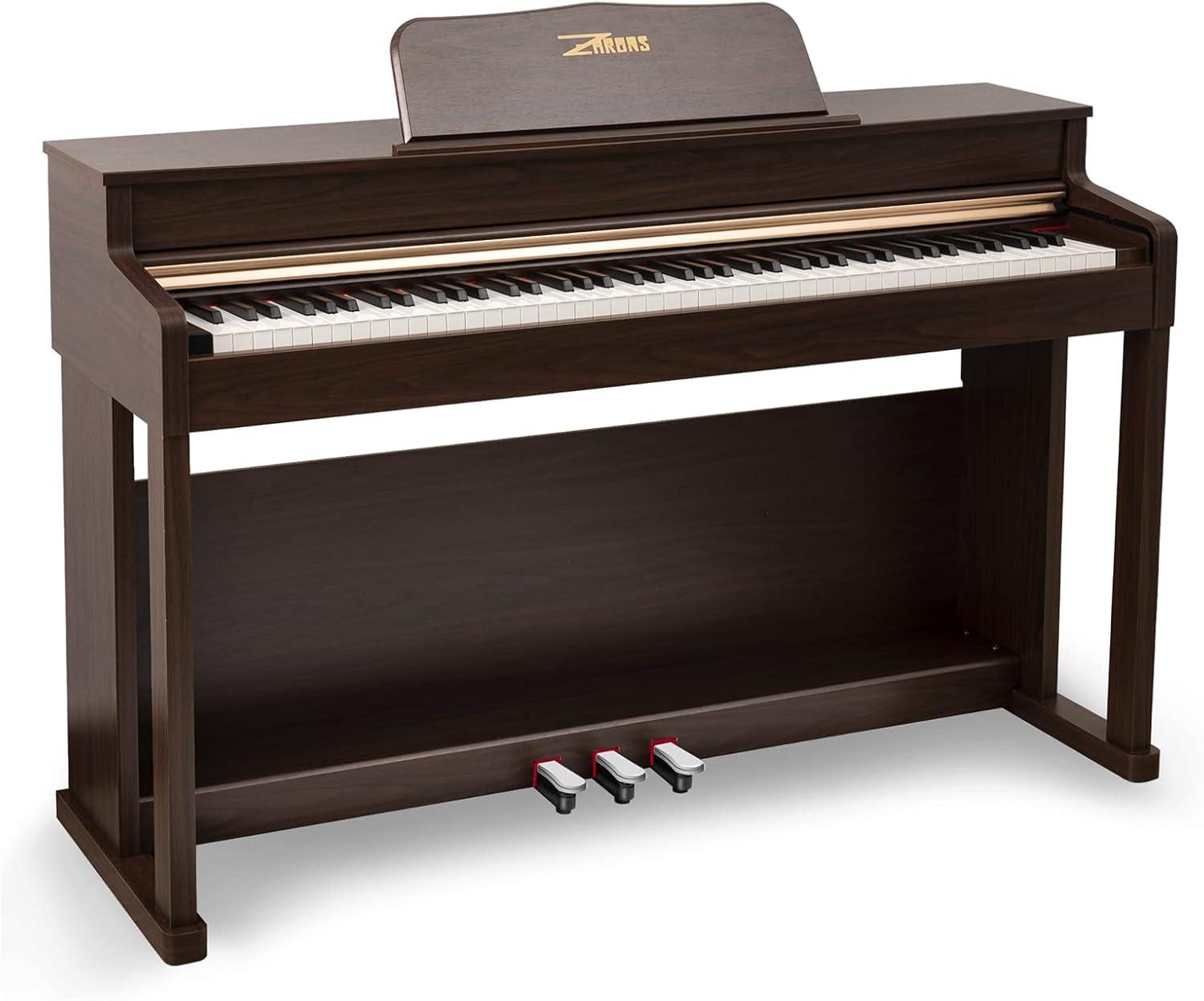

When we first slid the ZHRUNS Digital Piano M-903 out of its box and set it in our living room, it felt like bringing a small concert hall into an apartment. The brown finish and compact, classic cabinet make it look at home in a modern space, while the full 88-key progressive hammer action promises the kind of weighted touch many beginners and intermediate players crave. Over the last few weeks we’ve lived with this instrument-practicing scales, learning new pieces with an app, and even recording short ideas-and it surprised us in a few pleasant ways.
On paper the M-903 reads like a serious starter instrument: 88 full-weighted keys that increase resistance toward the bass, a three-pedal system (soft, damper, sostenuto), built-in stereo speakers, dual headphone outputs for quiet practice, and USB-MIDI connectivity so our tablet could become a teaching and composition hub. ZHRUNS’ DREAM sound source and multi-sampling promise realistic tones and high polyphony (the manufacturer lists up to 192 voices), while a slide-rail dust cover and included sheet music stand add practical, everyday convenience.
In this review we’ll walk through what these features actually feel and sound like in use-how convincing the hammer action is, whether the onboard sounds and speakers hold up, how easy it is to integrate with learning apps, and where the M-903 shines or shows its limits. If you’re weighing a full-sized digital piano for practice, lessons, or home performance, join us as we unpack the strengths and trade-offs of the ZHRUNS M-903.
Our Overview and First Impressions of the ZHRUNS Digital Piano
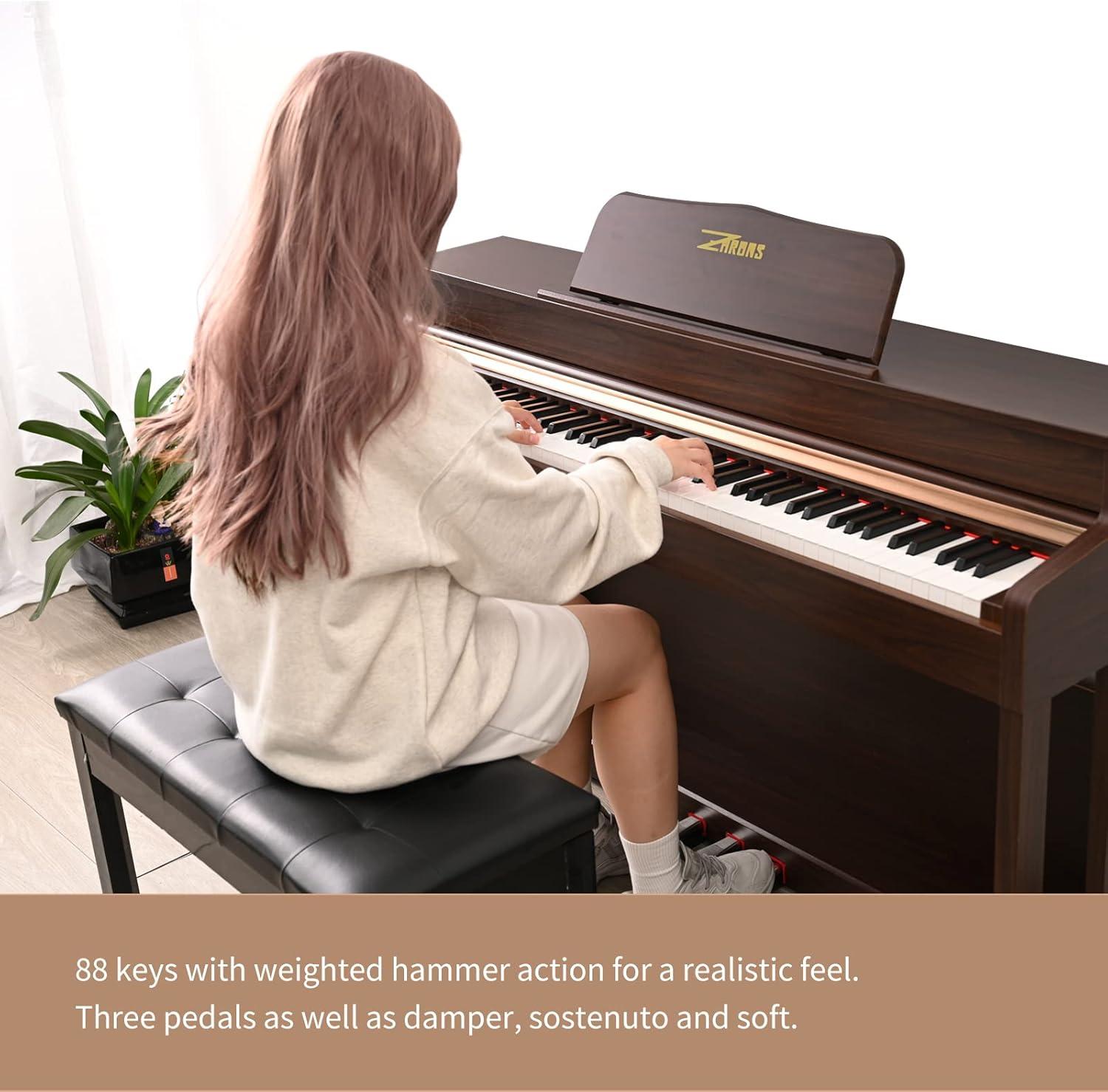
Our first impressions are of a surprisingly polished instrument that feels built for both beginners and practicing musicians. The progressive hammer action across 88 keys gives us a convincing grand-piano touch, and the DREAM sound source with multi-sampling delivers smooth trebles and a warm, full bass that translates well through the built-in stereo speakers. We immediately appreciated the thoughtful details: a dustproof slide-rail cover to protect keys, a three-metal-pedal system that supports soft, damper and half-pedal sustain techniques, and dual headphone jacks so two players can practice side-by-side without disturbing others. Highlights we noticed right away include:
- Keys: 88 full-weighted progressive hammer action
- Sound: Rich stereo sampling (DREAM sound source)
- Pedals: Soft / Sustain / Sostenuto with half-pedal support
- Practicality: Slide-rail cover and dual earphone outputs
On the tech side, the instrument feels modern and versatile: USB-MIDI connectivity lets us link to computers and mobile devices for lessons or MIDI control, and the onboard recording/playback plus 41 demo songs and multiple timbres encourage experimentation. There’s a generous feature set for learners – metronome, split/touch control, teaching modes and the ability to record original pieces – all packaged in a compact, classic cabinet that suits apartment living. Quick spec snapshot:
| Spec | At a glance |
|---|---|
| Keys | 88 weighted |
| Pedals | 3 (Soft/Damper/Sostenuto) |
| Polyphony | 128-192 (stereo sampling) |
| Connectivity | USB-MIDI, dual headphone jacks |
We’re impressed by how well the instrument balances authentic touch and learner-focused features; if you want to explore further, see current pricing and details here: Check Price & Details
What We Noticed About the Keys Hammer Action Triple Pedal and USB MIDI Connectivity
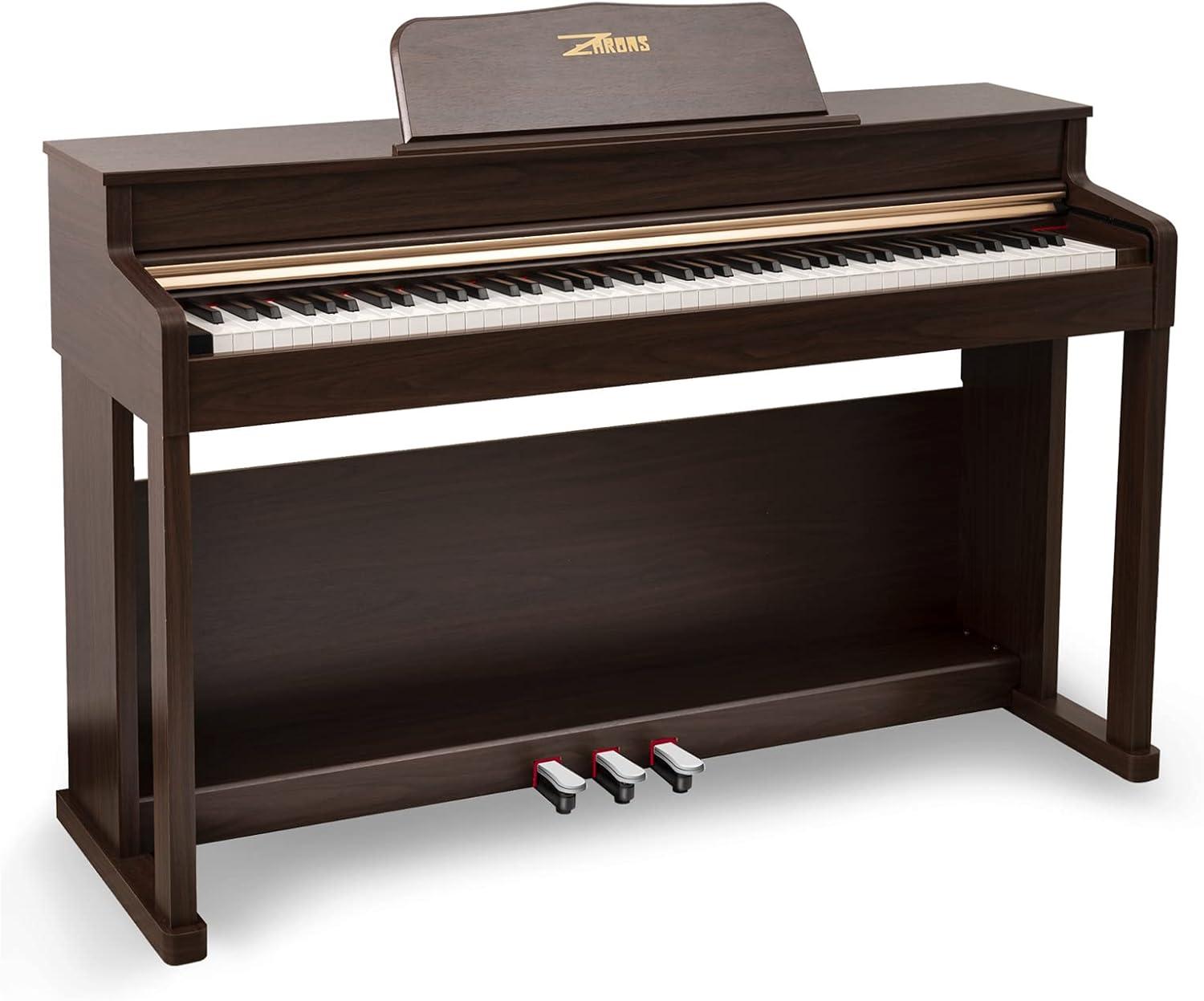
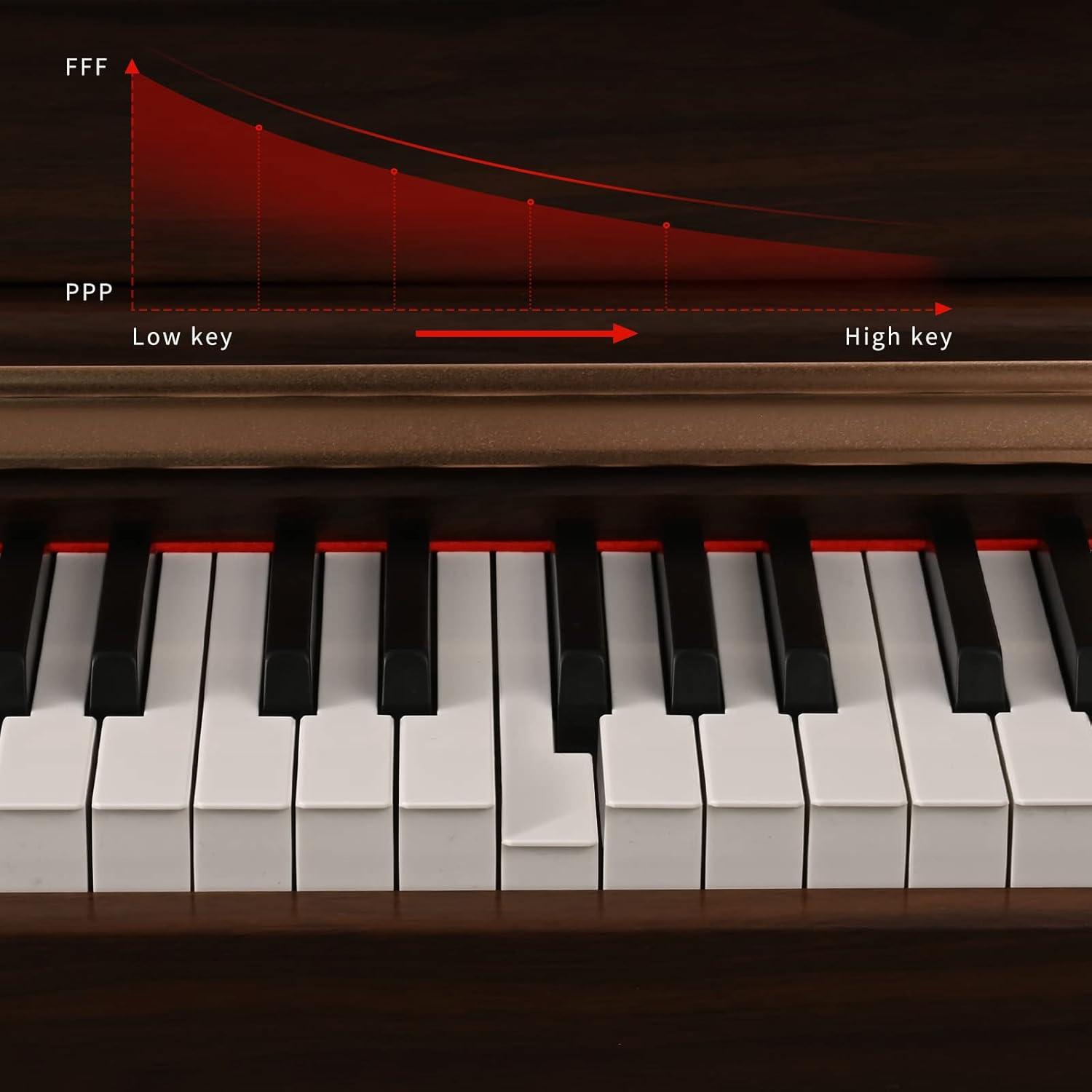
We were impressed by the feel of the 88-key progressive hammer action – the keys graduate from light treble to heavier bass so our dynamics and phrasing translate much like a grand piano. The combination of the Progressive Hammer mechanism and the French DREAM sound source with stereo sampling gives a rich, nuanced tone that responds well to touch. Other standouts for us included the high polyphony and dual headphone outputs that let two players practice quietly together without disturbing others.
- Progressive hammer action – realistic resistance across the keyboard
- Graded weighting – better control for expression and technique
- Stereo sampling & high polyphony – fuller, more detailed sound
- Dual headphone jacks – shared silent practice sessions
The three metal pedals are solid and musical – we liked the clear separation of functions: the soft pedal warms and mutes, the damper lengthens tone, and the sustain/sostenuto supports half-pedal nuance for more expressive playing. USB-MIDI connectivity proved immediately useful; we hooked up our laptop and tablet for smart lessons and recording, and the built-in record/playback made it simple to capture ideas. Below is a quick reference of connectivity and control benefits we appreciated.
| Feature | Benefit |
|---|---|
| USB-MIDI | Connects to computers, iOS/Android apps, and DAWs |
| 3 Pedal System | Soft, Damper, Sustain for expressive technique |
| Record/Playback | Easy practice review and song creation |
- Three metal pedals – reliable feel and half-pedal support
- Slide-rail dust cover – keeps keys protected between sessions
- MIDI compatibility – integrates with teaching apps and software
Explore the current price and specs on Amazon
Our Detailed Findings and Practical Recommendations for Practice Performance and Studio Use
In our hands-on evaluation we found the progressive hammer action and full 88-key weighting deliver a convincing grand-piano feel that suits both disciplined practice and light studio work; the DREAM sound source with advanced stereo sampling gives a smooth treble and robust bass that sit well in mixes. The triple metal pedal setup (soft, damper and sostenuto) supports expressive techniques-half‑pedal work is usable for nuanced phrasing-while the dual headphone jacks and built-in speakers let us switch between silent practice and immediate playback without re-patching. For routine practice and teaching, we recommend focusing on the following practical habits to get the most from the instrument:
- Use USB‑MIDI to integrate with DAWs and notation apps for recording and score playback.
- Enable record/playback after each session to track progress and audition arrangements.
- Utilize dual headphones during lessons so teacher and student can listen simultaneously without disturbing others.
- Employ metronome and demo songs to build timing and stylistic awareness incrementally.
For studio setups we appreciated the versatile connectivity (computer, iOS/Android) and the 192‑note polyphony-enough headroom when layering tones or using sustained pads-while the slide‑rail dust cover and stylish cabinet improve longevity and aesthetic fit in small spaces. Below is a quick reference we used when configuring the unit for practice vs. recording sessions:
| Use Case | Recommended Setup |
|---|---|
| Practice | Headphones + metronome + record function |
| Lesson | Dual headphones + split/touch control |
| Home Studio | USB‑MIDI to DAW + stereo outputs |
We invite you to try it and hear the difference for yourselves – Check current price and availability
Pros & Cons
Pros & Cons
We tried the ZHRUNS M-903 for practice, recording and lessons. Below are the advantages and the trade-offs we discovered while using it as an everyday home digital piano.
Pros
- Realistic feel: 88 full weighted keys with progressive hammer action give us a convincing grand-piano touch.
- Triple-pedal system: Soft, sustain and sostenuto pedals (with partial/half-pedal support) improve expressive control.
- Great connectivity: USB‑MIDI, headphone jacks (two!), and standard MIDI make it easy to connect to apps and DAWs.
- Recording & learning features: Built-in record/playback, metronome, demo songs and lesson-friendly functions speed up practice sessions.
- Solid sound engine: Stereo sampling and high polyphony produce rich, layered tones suitable for home performance.
- Practical extras: Slide-cover dust guard, included sheet music stand and power adapter are thoughtful, ready-to-play touches.
- Two listeners at once: Dual headphone outputs let two people practice silently together – perfect for lessons.
- Stylish finish: The brown finish and classic silhouette fit well in living-room settings.
Cons
- Build quality is mixed: The overall construction is functional but some plastic parts and pedals feel less robust than premium models.
- Speakers have limits: Built-in speakers are decent for practice but lack the depth and projection of higher-end instruments.
- Polyphony claims vary: Manufacturer specs mention different polyphony numbers; real-world layering can be limited in dense arrangements.
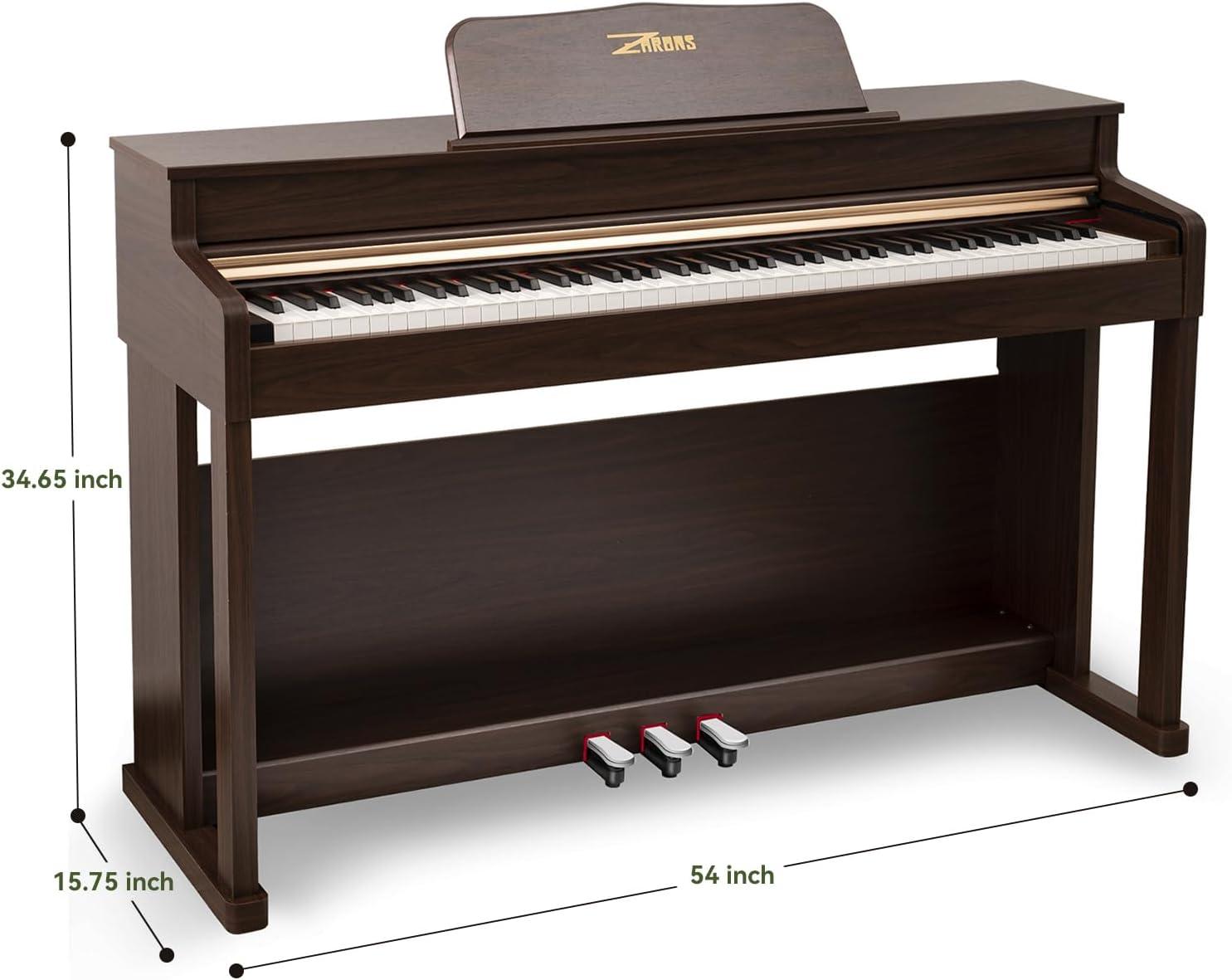
- Not fully portable: The unit is fairly heavy and needs a stand – it’s meant for a home setup, not frequent transport.
- Assembly & accessories: No dedicated bench or stand included in most packages, so you may need to buy extras.
- Timbre variety: Only a handful of tone options – fine for learning but not as versatile as workstations for sound design.
- App compatibility: While USB‑MIDI works, experiences with third‑party apps and drivers can vary by device.
- Finish preference: The brown wood-like finish looks great in some rooms but may not match all décor tastes.
Quick at-a-glance
| Highlights | Notes |
|---|---|
| 88 weighted keys | Realistic, progressive hammer action |
| Triple pedals | Includes soft/sustain/sostenuto |
| USB‑MIDI & dual headphones | Great for lessons and home recording |
| Speaker & build trade-offs | Good for home use, not a concert substitute |
Overall, we found the ZHRUNS M-903 to be a feature-rich, affordable option for students and home pianists. It balances realistic playability and practical extras with a few compromises in finish and speaker power – worth considering if you want a full-sized digital piano without breaking the bank.
Q&A
Q: Who is the ZHRUNS 88-Key Digital Piano best for?
A: We think it’s ideal for beginners and intermediate players who want a realistic, home-friendly piano without the footprint of a grand. Its full 88 weighted keys, teaching features, and dual-headphone jacks make it great for practice, lessons, duet practice, and composing at home. Serious concert pianists might still prefer an acoustic or a high-end stage piano.
Q: How does the keyboard feel?
A: The piano uses a progressive hammer (weighted) action, meaning keys feel heavier in the bass and lighter in the treble – much like an acoustic grand. In our experience that provides a convincing touch for learning technique and expressive playing.
Q: How realistic is the sound?
A: The unit uses the DREAM sound source with stereo sampling. We found the timbres to be smooth in the treble and full in the bass for home practice. The product listing mentions both 128 and 192 polyphony in different places; that inconsistency is worth checking with the seller, but either spec is generally adequate for most solo and practice scenarios.
Q: What are the connectivity options?
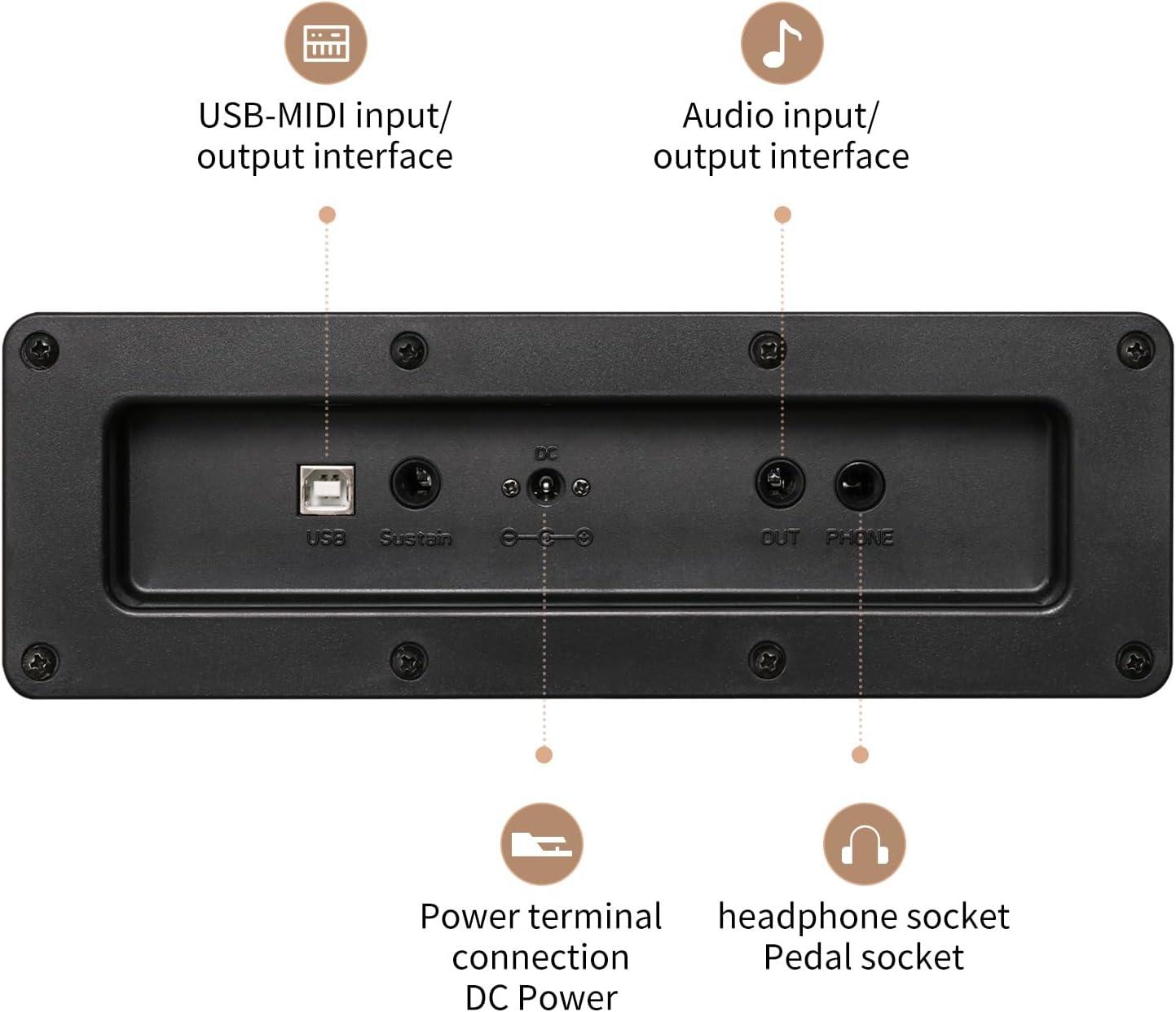
A: It supports USB‑MIDI connecting and has a MIDI interface that can link to computers, iOS and Android devices for apps and DAWs. It also has dual headphone outputs, speaker outputs, and standard audio features. To connect to tablets/phones you’ll likely need the appropriate USB and/or OTG/Lightning adapters.
Q: Is latency a problem when using apps or a computer?
A: Latency depends more on the cable, device, and app than on the piano itself. We recommend a quality USB‑MIDI cable, low-latency apps, and (on Windows) an ASIO driver if you use a DAW. For most teaching apps and practice, latency should be acceptable.
Q: What about the pedals?
A: The piano includes three metal pedals: soft, sustain (damper), and sostenuto. The sustain supports half‑pedal operation, which we found useful for expressive playing and more advanced pedaling techniques.
Q: Are speakers adequate for home use?
A: It has built‑in stereo speakers and delivers good volume and clarity for apartment and home practice. If you need more projection or a stage-ready setup, an external amp or studio monitors would be better.
Q: Can two people use headphones at the same time?
A: Yes. There are two headphone jacks so two players can hear privately at once – a handy feature for lessons or late-night practice.
Q: What teaching and recording features does it have?
A: The M‑903 includes demo songs (41 built‑in), multiple timbres, metronome, split/touch sensitivity, recording and playback functions, and a teaching mode. You can record performances internally or send MIDI to apps to capture more detailed recordings.
Q: What’s included in the box?
A: The listing specifies a sheet music stand, triple pedal unit, and power adapter are included. It also mentions a dustproof slide cover. A bench is not mentioned, so we assume that is not included – check the seller listing to confirm.
Q: How hard is it to set up?
A: We found setup to be straightforward: insert the sheet music stand, connect the pedal unit and power adapter, and plug in any cables you need. Because specifications and packaging can vary, we suggest reviewing the retailer’s assembly notes and having a second person assist if any mounting requires lifting.
Q: How durable and well-built does it feel?
A: The build includes metal pedals and a slide-rail dust cover, which feel sturdy. The brown finish gives a classic, home-friendly look. For long-term durability, keep it covered and avoid excessive humidity or direct sunlight.
Q: Any compatibility caveats we should know?
A: Yes – when connecting to phones or tablets you may need specific adapters (OTG for Android, Lightning to USB Camera Adapter for older iPads). Also check whether the piano uses a standard USB‑B port (common) or another connector so you can order the right cable.
Q: Warranty, returns, and support – what’s the situation?
A: The product description we reviewed doesn’t list warranty details. We recommend checking the seller’s warranty and return policy before purchase and saving your order information in case you need support.
Q: Final verdict – should we buy it?
A: If we want an affordable, full‑size weighted keyboard with triple pedals, decent onboard sounds, USB‑MIDI support, and features for learning and recording, this ZHRUNS model is a strong contender for home use. If we need a pro stage instrument, the highest-fidelity sampled sounds, or a built-in bench and full furniture cabinet with detailed manufacturer-backed warranties, we’d compare higher-end options first.
If you want, we can add a short checklist for what to verify with the seller before buying (dimensions, weight, exact polyphony spec, included accessories, and warranty).
Seize the Opportunity
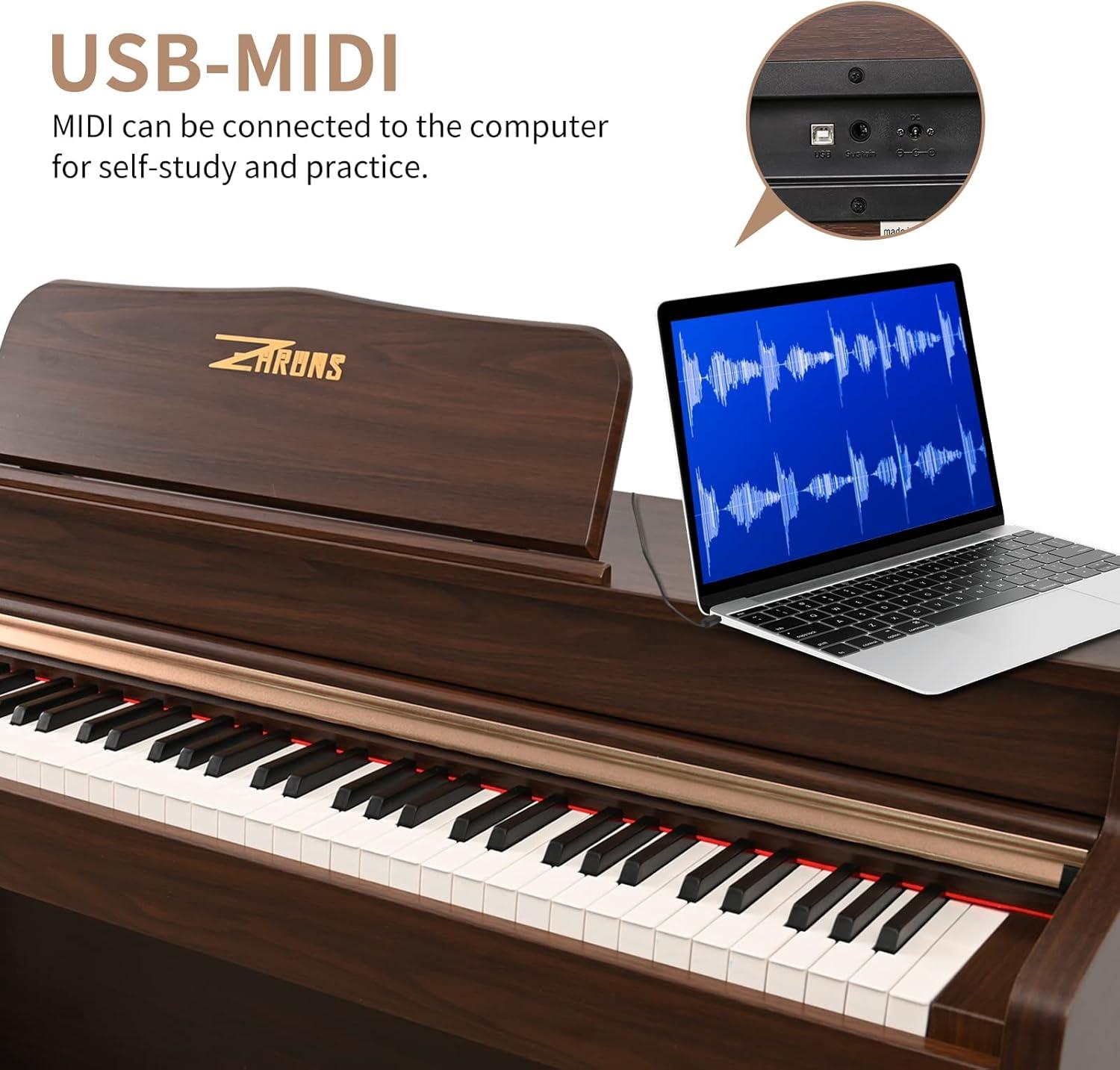
We’ve enjoyed exploring the ZHRUNS M-903 and putting its features through their paces. In our experience, the full 88-key progressive hammer action, triple-pedal setup and DREAM sound sampling give a convincingly piano-like feel and a rich tonal palette suited to practice, home performance and learning. The USB-MIDI connectivity, dual headphone jacks and onboard recording/teaching functions make it a flexible choice for students, duo practice and anyone who wants to integrate digital lessons or software into their routine.
That said, we recommend weighing your priorities: if you want an affordable, feature-packed instrument that looks smart in a living space and supports growth from beginner to intermediate, this model is a strong contender. If you favor ultra-premium cabinetry or boutique key action, you may want to audition alternatives in person. As always, trying the keys and listening through headphones will tell you most of what you need to know.
If you’d like to take a closer look or decide for yourself, we’ve made it easy to view the full product listing here: See the ZHRUNS 88-Key Digital Piano on Amazon.
Have questions or want us to compare this to another model? Let us know – we’re happy to help you find the right piano for your journey.


Reviews
There are no reviews yet.